The "New World Order": What the Phrase Really Means
Oct 8, 2026 · By Adnan Brohi · World · 210 views
A Phrase With Many Owners
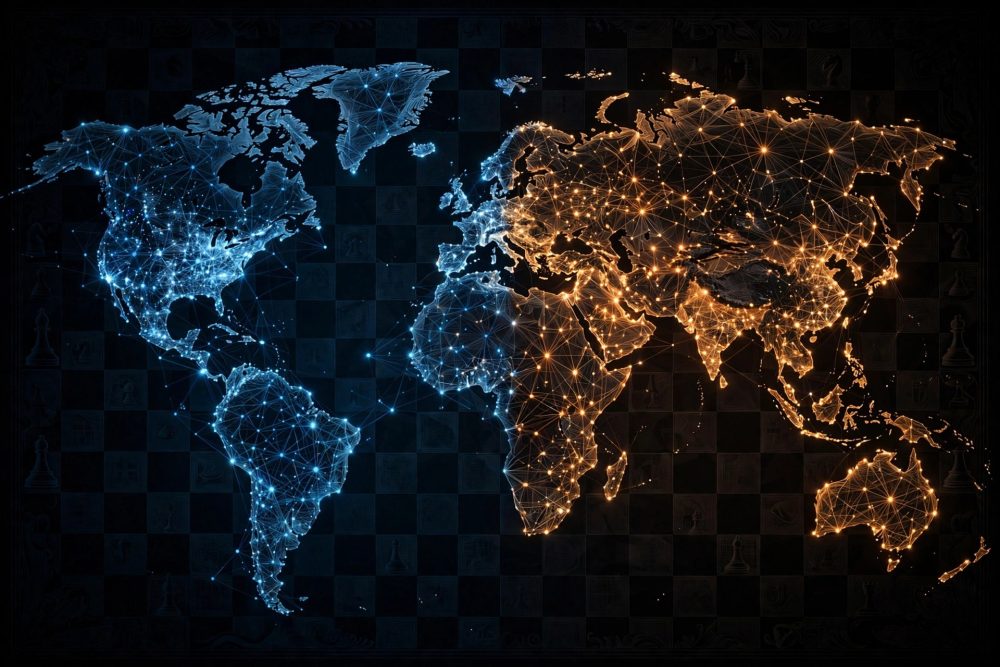
Few political phrases have been used — and misunderstood — as much as the "new world order." Depending on who is speaking, it can mean a hopeful vision of global cooperation, a description of shifting great-power politics, or something far more sinister. The truth is that the phrase has a long history, and almost every generation has given it a new meaning.
The idea of a "new order" in international affairs is over a century old. After the First World War, American President Woodrow Wilson spoke of a new international system based on national self-determination and a League of Nations — an order meant to replace the secret alliances that had dragged the world into war. After the Second World War, the phrase surfaced again: the creation of the United Nations, the World Bank and the IMF was described by its architects as a new order for a ruined world.
The 1990 Version
The most famous use of the term came on 11 September 1990, when US President George H. W. Bush addressed Congress during the Gulf crisis. He spoke of "a new world order" in which "the nations of the world, East and West, North and South, can prosper and live in harmony" — a world where the rule of law, not the law of the jungle, would govern nations.
Bush was describing the moment after the Cold War: the Soviet Union was collapsing, and for the first time in decades, the great powers were cooperating — the UN Security Council authorised the coalition that liberated Kuwait. Many scholars called the 1990s the "unipolar moment": a single superpower, the United States, stood at the centre of the global system, and liberal democracy and open markets seemed to be spreading everywhere.
The Multipolar Turn
That unipolar moment did not last. Over the last two decades, the phrase "new world order" has taken on a different meaning: the shift toward a multipolar world, in which power is spread among several centres rather than concentrated in one.
The signs are everywhere. China's economy grew to rival America's. India became the world's most populous nation and a major economic power. The BRICS group — originally Brazil, Russia, India, China and South Africa, now expanded — presents itself as a voice for the "Global South," seeking trade, development finance and international institutions that are less dominated by the West. Regional powers from the Gulf to Southeast Asia now balance relationships with multiple great powers instead of aligning with just one.
None of this happened overnight. The 2008 financial crisis, the long wars in Iraq and Afghanistan, the rise of digital economies, and the Covid-19 pandemic each weakened confidence in the old order and accelerated the search for alternatives.
Why the Term Means Different Things to Different People
Part of the confusion around the phrase is that it is used in at least three different ways:
1. As a policy vision. Leaders like Wilson and Bush used it to describe the international system they hoped to build — usually one based on rules, cooperation and shared institutions.
2. As a description of power shifts. Analysts today use it to describe the move from a US-led order to a multipolar one — who holds economic, military and technological power, and how that is changing.
3. As a conspiracy narrative. The phrase has also been adopted by conspiracy theories imagining a secret global elite plotting world domination. Historians note that this usage says more about public distrust of elites than about how international politics actually works — real geopolitics is messy, public and full of rivalries, not a single hidden plan.
Why It Matters to You
You do not need to be a diplomat to feel the effects of a changing world order. The price of fuel, the value of currencies, the technology in your phone and the news on your screen are all shaped by how power is organised between nations. Understanding the phrase — and the very different things people mean by it — is the first step toward reading the news with clearer eyes.
Orders rise and fall; that is the one constant of history. The question is never really whether a "new world order" is coming. It is always: whose order, built on what rules, and who gets a seat at the table.


Comments 0
No comments yet. Be the first!
Leave a comment